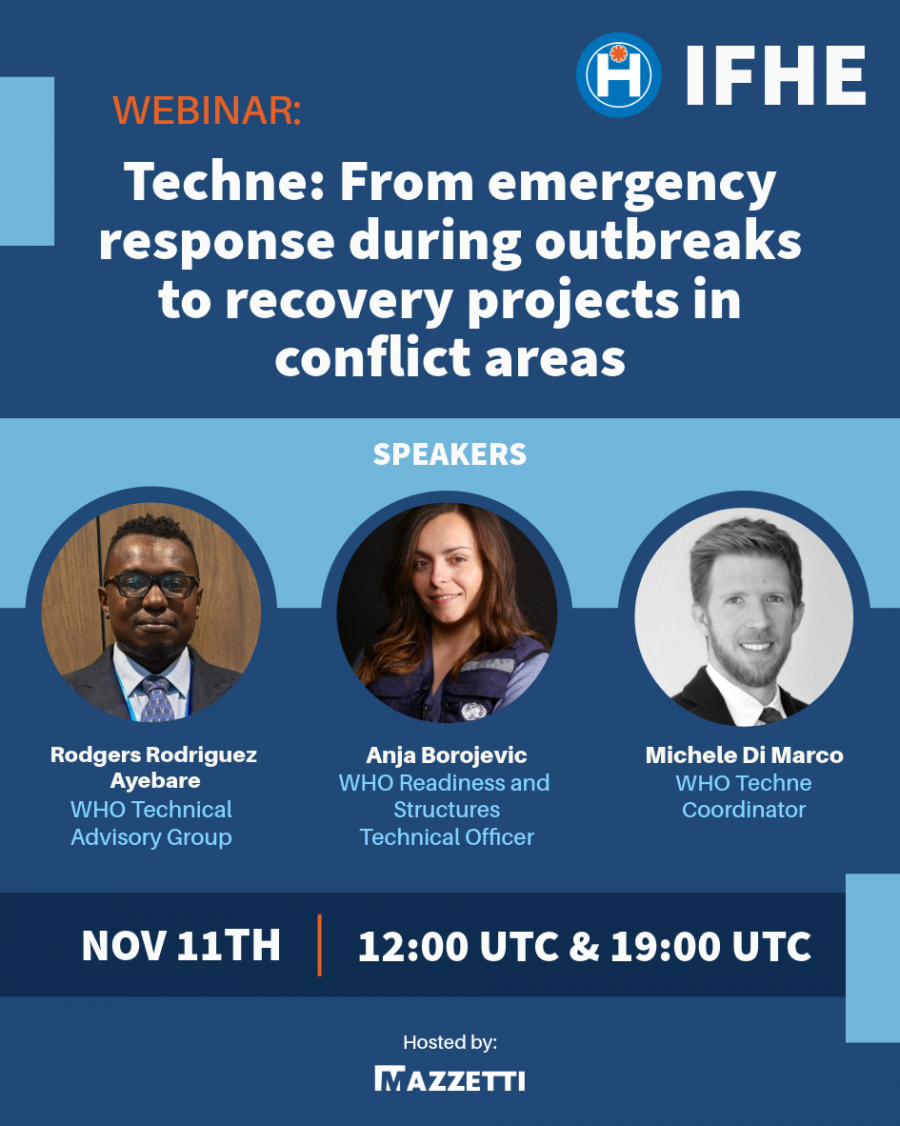
This presentation will look at how Téchne, the World Health Organization Technical Science for Health Network, helps countries design, adapt and strengthen health infrastructure across the whole emergency cycle, from acute outbreak response through to recovery in areas affected by conflict. It will open with the network's work on engineering controls and technical specifications for treatment centers for high-consequence infectious diseases. It will then turn to Uganda's experience with Ebola, and to the support IDI Uganda has provided in developing the Infectious Diseases Treatment Module through INITIATE. Finally, it will move to Ukraine, where structural assessments, risk-informed design and operational readiness are helping health-care facilities stay safe and functioning under attack. Taken together, these perspectives from architecture, engineering and clinical IPC show how multidisciplinary collaboration can link emergency interventions to longer-term recovery and resilience.
Learning Objectives:
-
Understand how technical and multidisciplinary collaboration can support health infrastructure during outbreaks and humanitarian emergencies.
-
Identify the key design, IPC and engineering considerations for building safe, functional treatment and isolation facilities for high-consequence pathogens.
-
Recognize how structural assessment, risk-informed design and operational readiness can protect health-care facilities in conflict settings, and how emergency work can inform resilient recovery and long-term health system strengthening.